What to Expect During Your
One-Hour Initial Assessment
Your first visit is about understanding what hurts, what’s not moving the way it should, and why.
We’ll talk about what you’re experiencing, look at how your body moves, and test the areas that may be contributing to the problem. The goal isn’t simply to relieve symptoms. It’s to understand what’s causing them so we can build the right plan for you.
- We Start With Your Story -
Where does it hurt? When did it start? What makes it better or worse? And most importantly, what is it keeping you from doing?
We want to understand the problem from your perspective before we start testing anything.
- We Look at How You Move -
Pain in one area can sometimes be connected to how another part of your body is moving.
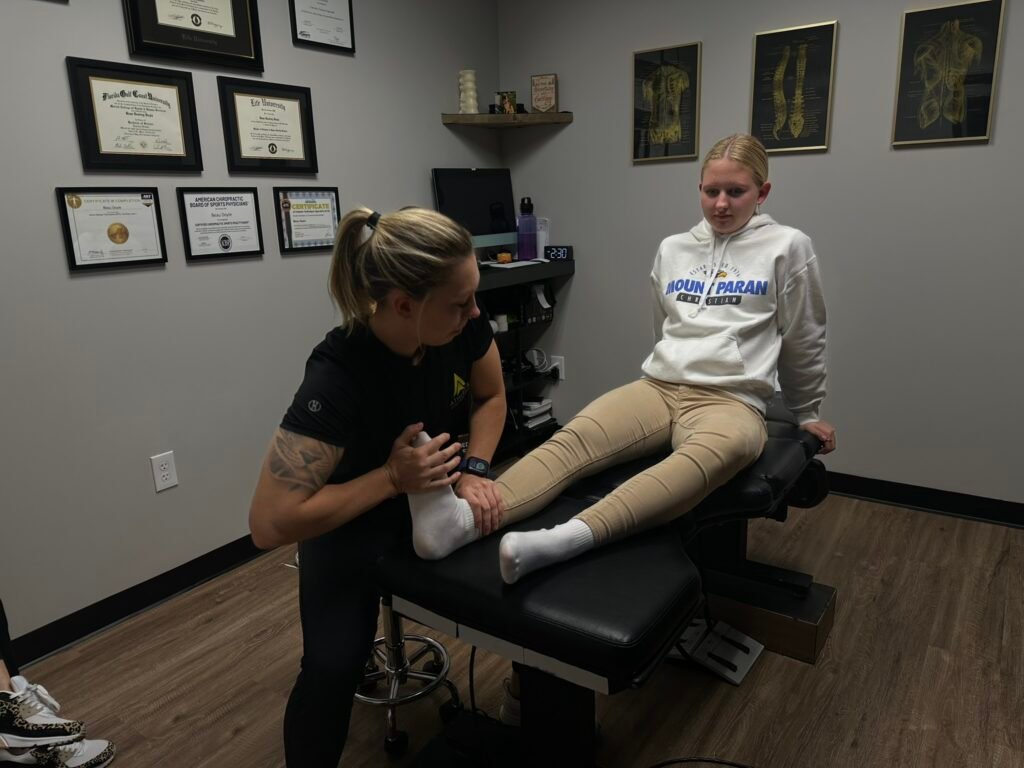
We’ll watch you walk, bend, reach, squat, or perform other movements related to your problem to see where things may be tight, weak, unstable, or compensating.
- We Look for the Real Cause -
The painful spot isn’t always the source of the problem.
We’ll check strength, mobility, flexibility, and range of motion, then look at how the surrounding areas work together.
A sore knee may involve the hip or ankle. Shoulder pain may be influenced by the neck or upper back. We look at the bigger picture so we don’t simply chase symptoms.
- We Check How Your Body Responds -
When appropriate, we may use hands-on techniques to identify tight muscles, restricted tissue, or areas that aren’t moving normally.
This helps us understand what changes your symptoms and which treatment approaches may be most useful.
- You'll Understand What We Found -
Before you leave, we’ll explain what we believe is contributing to the problem in plain English.
You’ll have a clearer understanding of:
- What we found
- What may be causing your pain or limitation
- What we recommend doing about it
- What you can expect going forward
- Your Plan is Built Around You -
There’s no standard treatment package.
Your plan may include hands-on treatment, rehabilitation exercises, and other treatment options based on what we find during your assessment and what you’re trying to get back to doing.
The goal: less pain, better movement, and a clear path forward.
Certifications
Our training helps us evaluate movement, identify the source of pain, and choose the treatment approaches that best fit each patient.
These certifications reflect our commitment to helping you recover, move better, and get back to the activities that matter to you.


